

Ajit Pawar: The Man Who Kept Maharashtra Governable
Without Ajit Pawar, the state faces a vacuum no alliance can easily fill
Ajit Pawar: The Man Who Kept Maharashtra Governable
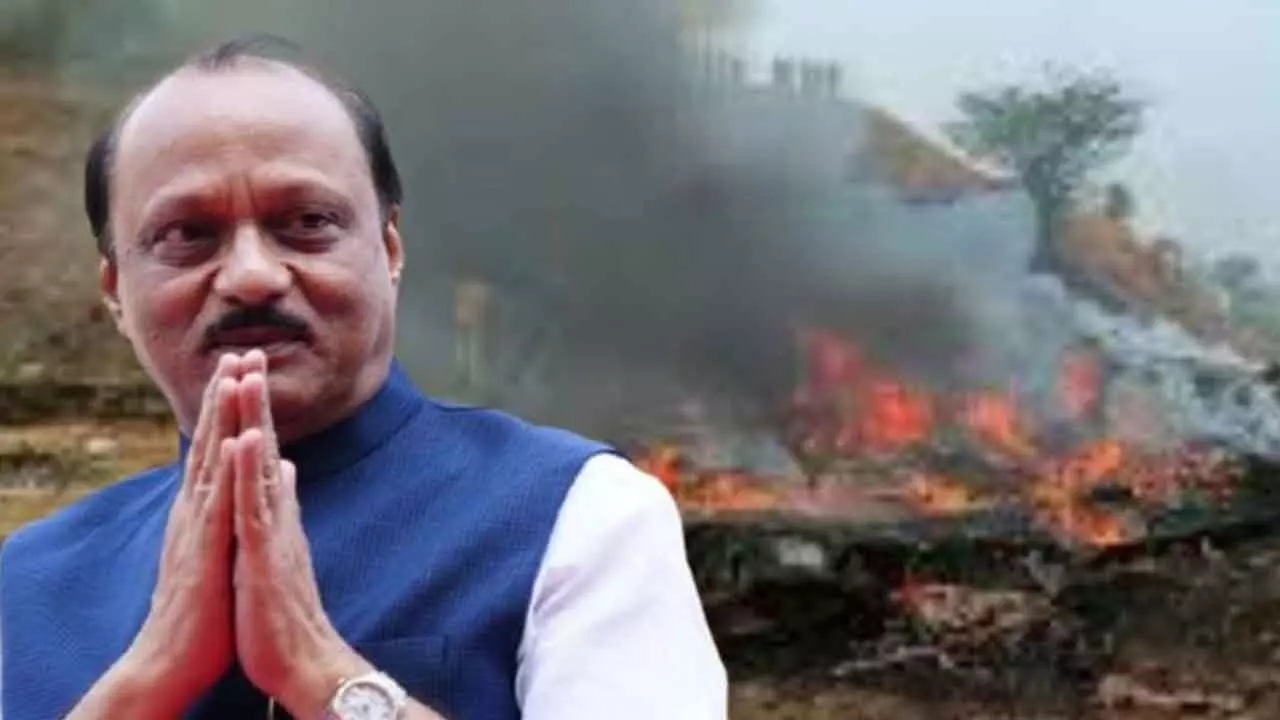

In the early hours of Wednesday morning, Maharashtra’s political firmament was shaken to its core with the tragic death of Ajit Anantrao Pawar, the Deputy Chief Minister of Maharashtra, in a plane crash near Baramati. The Mahayuti alliance has suffered a major set back in the tragic death of Ajit Pawar.
At 66, Pawar was at the height of his political influence — a veteran strategist whose imprint on Maharashtra’s governance stretched over three decades and whose role in shaping the state’s fiscal and political landscape was unparalleled. His sudden passing leaves an unmistakable void in regional and national politics.
Ajit Pawar’s name was synonymous with Maharashtra’s cooperative movement, a unique social and political ecosystem central to the state’s rural governance and economic life. Born on 22 July 1959 in Deolali Pravara, Ahmednagar district, Pawar started his public life not in the corridors of power but in local cooperatives and sugar factories — institutions that serve as the backbone of western Maharashtra’s rural economy.
In 1982, at the age of 23, he was elected to the board of a sugar factory. Over the next decade, he ascended to become chairman of the Pune District Central Cooperative Bank, a tenure of 16 years that cemented his grassroots base. This cooperative grounding was no mere sociological detail; it was the foundation on which his political tower was built.
He wad one of the most electorally secure and politically significant leaders in the state. His formal legislative career began in 1991 with his election to the Maharashtra Legislative Assembly from Baramati — a seat he continuously held for more than thirty years.
He was a strategist par excellence. Pawar’s rise was marked by his command over major portfolios — particularly finance, planning, irrigation, water resources, energy, rural development and state excise. Known for his rigorous engagement with budget formulation and fiscal policy, he presented Maharashtra’s budget repeatedly, earning the reputation of the state’s fiscal architect. He was due to present 2026-27 budget as well soon.
He was not merely a technocrat; he was a bridge between policy and politics. In a state characterised by coalition governments and shifting political alliances, his name became synonymous with administrative acumen and political calculation. Across different chief ministers and parties, he served as Deputy Chief Minister six times, making him the longest-serving leader in that role in Maharashtra’s history.
His legislative agility came to the fore during the tumultuous years of Maharashtra politics — notably in November 2019, when he briefly joined hands with the Bharatiya Janata Party (BJP) to form a government that lasted just 80 hours. The episode, though short-lived, underscored his capacity to rewrite political equations.
But the most consequential turn came in 2023, when Pawar engineered a split in the Nationalist Congress Party (NCP) — the party founded by his uncle, veteran leader Sharad Pawar — and steered a faction into a coalition with the BJP and Shiv Sena under the Mahayuti alliance. This not only reshaped Maharashtra’s power matrix but also marked his emergence as a standalone political force rather than merely a deputy in a regional party.
His influence was not confined to the state capital; it touched the daily lives of farmers, traders, and ordinary citizens across Maharashtra, particularly in the sugar belt and rural hinterland where the cooperative movement remains central to political mobilisation.
Ajit Pawar’s political identity was multi-layered — part custodian of rural interests, part coalition manager, part fiscal strategist, and part political risk-taker.
His detractors, however, pointed to frequent alliance shifts and internal party rifts as evidence of a political pragmatism that sometimes bordered on opportunism. The 2023 NCP split, in particular, was criticised as diluting a principal opposition force in the state, while supporters argued it was a necessary adaptation to changing political realities.
Controversy was never far from Pawar’s orbit. Like many long-serving leaders, he faced allegations and scrutiny over governance issues; critics cited challenges in irrigation projects and questions about transparency and influence. Yet none of these diminished his hold on his constituency or his political relevance.
The immediate response to Pawar’s death has been one of profound shock and grief across political divides. Maharashtra Chief Minister Eknath Shinde described him as a “straightforward and fearless leader” deeply committed to administration and decision-making. Prime Minister Narendra Modi also paid tribute, calling him a “leader of the people” with a lifelong dedication to public service.
In Baramati — the very town that was the crucible of his political life — the sense of loss is palpable. It was here that he forged his first networks, and it was here that the dramatic end of his public service occurred.
With Pawar’s passing, Maharashtra faces a period of political recalibration. The NCP faction he led, with its significant legislative presence, will have to regroup and find new leadership. Questions loom large: who will carry forward his responsibilities as Deputy Chief Minister? How will the balance within the Mahayuti alliance shift? Will there be renewed attempts to reconcile the fractured strands of the NCP’s legacy? These are immediate strategic questions that will define the state’s political trajectory in the months ahead.
Beyond party equations, his death raises broader questions about leadership in regional politics and the institutional strength of parties in managing succession, coherence and policy continuity. Maharashtra — India’s wealthiest state and a bellwether of federal political trends — cannot afford sustained instability. The vacuum left by Pawar’s departure must be filled with leaders who match his administrative insight and political gravitas.
Ajit Pawar’s journey from the cooperative boards of rural Maharashtra to the helm of state governance exemplifies the complexities of Indian regional politics — enduring networks, shifting alliances, public service, and the relentless pursuit of influence. For close to 35 years, he was neither an ephemeral leader nor a backseat operator; he was a central pivot around which Maharashtra’s political story unfolded.
In the unforgiving world of politics, where careers can falter overnight, his steady rise and sustained relevance were remarkable. His death is not just a loss of a seasoned politician; it is the end of an era in Maharashtra’s political narrative — one that was defined by negotiation as much as governance, by coalition as much as constituency, and by the unceasing interplay of power and public purpose.
As Maharashtra mourns, it also enters a new chapter — one that will test the resilience of its institutions and the mettle of a generation of leaders who must now navigate in the shadow of Ajit Pawar’s legacy.
(The author is a former Chief Editor at The Hans India)





